





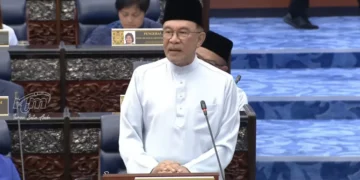


















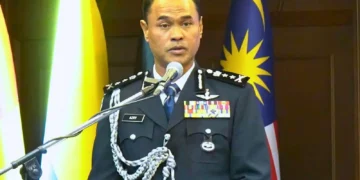













KUALA LUMPUR – After weeks of speculation, manoeuvring and internal tension, Perikatan Nasional (PN) has finally settled on Datuk Seri Dr Ahmad Samsuri Mokhtar as Opposition Leader.
The appointment of the PAS vice-president is seen by many as an attempt to stabilise the opposition bloc after growing questions over leadership direction within PN in recent months.
On the surface, the decision appears to have ended internal uncertainty following the departure of Datuk Seri Hamzah Zainudin from the role.
But behind the public display of unity, political observers believe the real challenge may only be beginning.
The position of Opposition Leader today is no longer viewed merely as a parliamentary responsibility. Increasingly, it is seen as the clearest indication of who may eventually emerge as the coalition’s prime ministerial face heading into the next general election.
That is what makes Samsuri’s rise politically significant.
Unlike several outspoken figures often associated with PN politics, Samsuri has built an image seen as calmer, more measured and less confrontational. His leadership style is also viewed as potentially more appealing to moderate and middle-ground voters outside PAS’ traditional support base.
For PAS, elevating Samsuri could help reshape the coalition’s national image at a time when PN is attempting to widen its appeal beyond its core supporters.
At the same time, the move inevitably raises questions within Bersatu, where several senior leaders are still regarded as influential power brokers with their own long-term political ambitions.
Among the names frequently linked to future leadership discussions is Hamzah, who continues to command influence within the coalition despite stepping aside from the Opposition Leader’s role.
Political circles have also continued to speculate on the influence of factions aligned to Datuk Seri Mohamed Azmin Ali, particularly in shaping the future direction and leadership dynamics within PN.
The reality of coalition politics is that rising popularity can quickly become both an advantage and a political risk.
The more Samsuri’s national profile grows, the more closely he is likely to be watched not only by political opponents, but also by factions within his own coalition seeking to protect their influence.
Some observers believe Samsuri’s appointment may also reflect an effort by PN to refresh public perception of the coalition following a series of controversies involving several senior opposition leaders over the past year.
While the move may temporarily ease tensions and provide a clearer leadership structure, questions remain over whether PN is genuinely united behind a single long-term direction.
For now, PN finally has an Opposition Leader.
Whether the coalition can remain united behind him may prove to be a far more difficult challenge. -MalayaDailyToday