












































KUALA LUMPUR – Malaysians buy medical insurance hoping it will protect their savings when illness strikes. Yet for a growing number of policyholders, keeping that protection is becoming a financial challenge of its own.
A recent 2026 Malaysian Healthcare & Insurance Survey, highlighted by The Rakyat Post, found that 34.6 per cent of respondents no longer felt their existing medical insurance plans were worth keeping, with rising premiums and affordability among the main concerns.
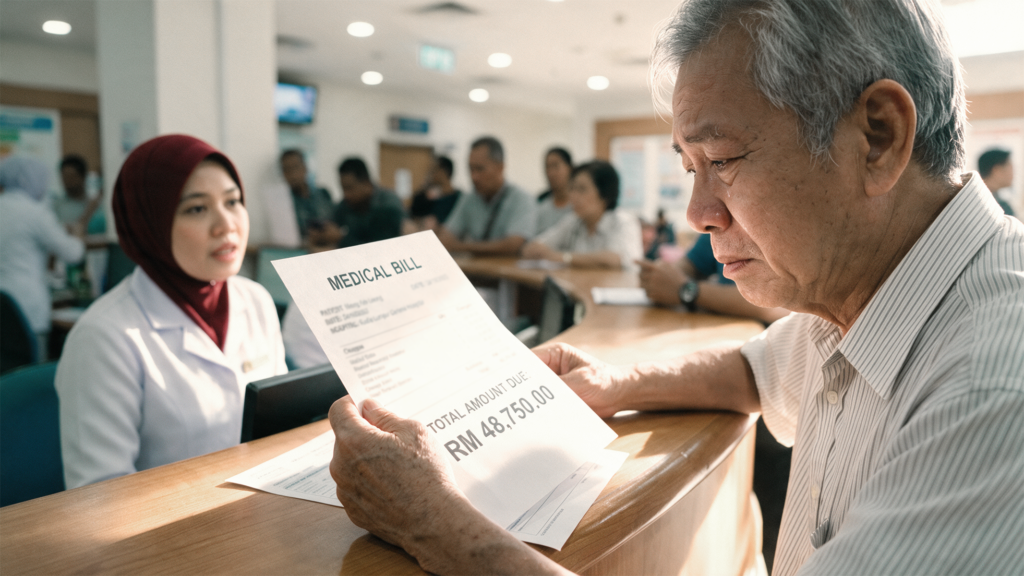
The findings point to a growing disconnect between what consumers expect when they buy medical coverage and what they experience when they actually need to use it.
For those paying less than RM150 a month, 74 per cent of respondents said they were satisfied with their coverage.
But satisfaction fell to between 33 and 37 per cent among those paying more than RM300 a month after encountering problems with their claims.
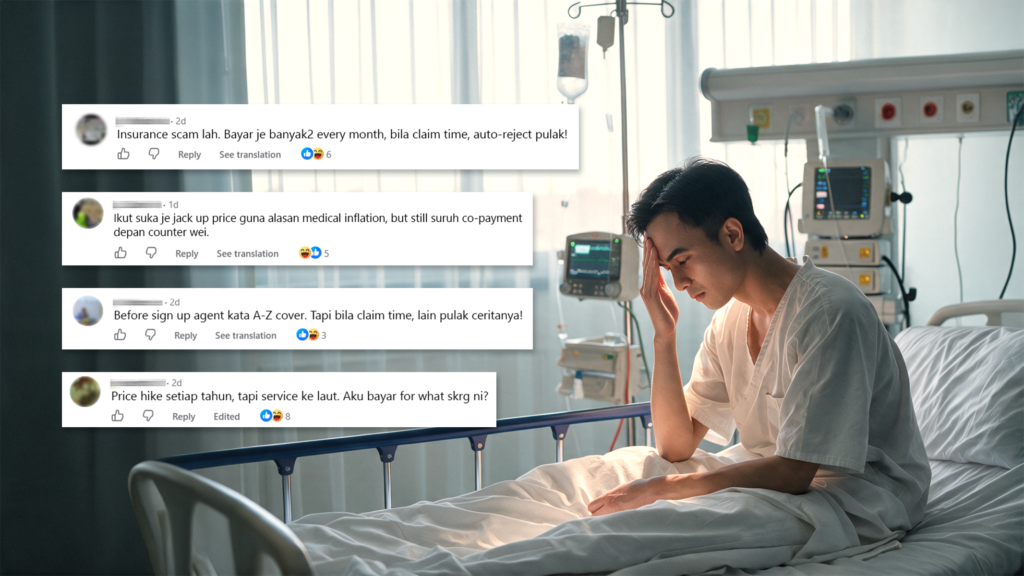
“Premiums go up every year, but the coverage seems to stay the same,” one respondent said.

The survey, which recorded 815 valid responses, found that having medical insurance did not necessarily mean patients could walk away from hospital treatment without an additional financial burden.
Some 64.7 per cent said they had to pay part of their latest hospital bill out of their own pockets, with some reporting that their contribution exceeded 20 per cent of the total bill.
Medicines were another major source of unexpected expenses.
Some 71 per cent said they had to pay extra for prescribed medication because it was not fully covered by their insurance.
Among them, 284 respondents encountered problems involving branded medicines when insurers covered only generic alternatives, while 230 said medicine claims were rejected after the products were classified as supplements.
Another 225 respondents said they received medication for a shorter period than prescribed by their doctors.
“My child was sick and I still had to contribute towards the medical bill despite paying a monthly premium. Then the premium went up again,” one respondent said.
The frustrations also extend to claims.
Nearly 30 per cent of respondents said they had experienced claims being partially or completely rejected over the past two years, while 24 per cent of those affected said the reasons for rejection were not clearly explained.
“When you actually make a claim, that is when you discover how many things are not covered,” another respondent said.

Interestingly, the survey showed that paying more for a policy did not necessarily translate into a higher reported approval rate.
Policies costing between RM300 and RM500 a month recorded an approval rate of 85.7 per cent, compared with 81 per cent for policies costing more than RM500.
The Rakyat Post’s report also highlighted concerns raised by Malaysians over changes to hospital panels, with some policyholders finding themselves unable to continue seeing doctors they had previously relied on.
Some 31.7 per cent of respondents said they could no longer see their usual doctors after the hospitals involved were removed from their insurers’ panels.
Another 28.3 per cent said they were unaware that such changes could happen.
Meanwhile, 31 per cent were unsure whether the terms of their policies had changed over the previous two years.
“I pay every month, but honestly, I am not entirely clear about what my medical insurance actually covers,” a respondent said.
That uncertainty can become particularly serious when treatment is urgent.
More than half of respondents said they waited at least three working days for a Guaranteed Letter, or GL, while 23.1 per cent reported waiting more than five working days.

Delays between hospitals and insurers were also said to have affected treatment schedules, including procedures that had to be postponed or rescheduled.
Another concern involves restrictions on treatment.
Almost 70 per cent of respondents said they had experienced some form of limitation on their treatment plans.
Of these, 49.6 per cent said restrictions were imposed without their doctors’ agreement, while 10.6 per cent said their doctors had expressly disagreed with the insurer’s decision.
A quarter said such restrictions affected their treatment outcomes or comfort.
“Why pay more every year for a service that keeps getting worse?” one respondent asked.
The pressure on policyholders is reflected in another significant figure cited in the report: more than 340,000 medical insurance and takaful policies were cancelled or surrendered between January 2024 and June 2025.
That raises a broader concern about what happens when people can no longer afford private medical coverage.
For some households, cancelling a policy may provide immediate financial relief. But it also means taking on greater personal financial risk when serious illness or hospitalisation eventually occurs.
The issue is particularly significant for older Malaysians, who may face higher premiums precisely when their need for medical protection becomes greater.
One respondent warned that more elderly people could eventually give up their coverage because premiums continue to rise, potentially placing greater pressure on the public healthcare system.
The concerns are not simply about whether Malaysians can afford insurance today.
They are about whether they can afford to keep the same protection tomorrow, whether they understand exactly what they are paying for and whether that protection will be there when they need it most.
The Rakyat Post’s report, together with the survey findings and responses from policyholders, puts the dilemma into sharper focus: medical insurance is meant to provide financial security during a health crisis.
For some Malaysians, however, the rising cost of maintaining that security is becoming a worry in itself. -MalayaDailyToday
You can read the full 2026 Malaysian Healthcare & Insurance Survey report here.