



































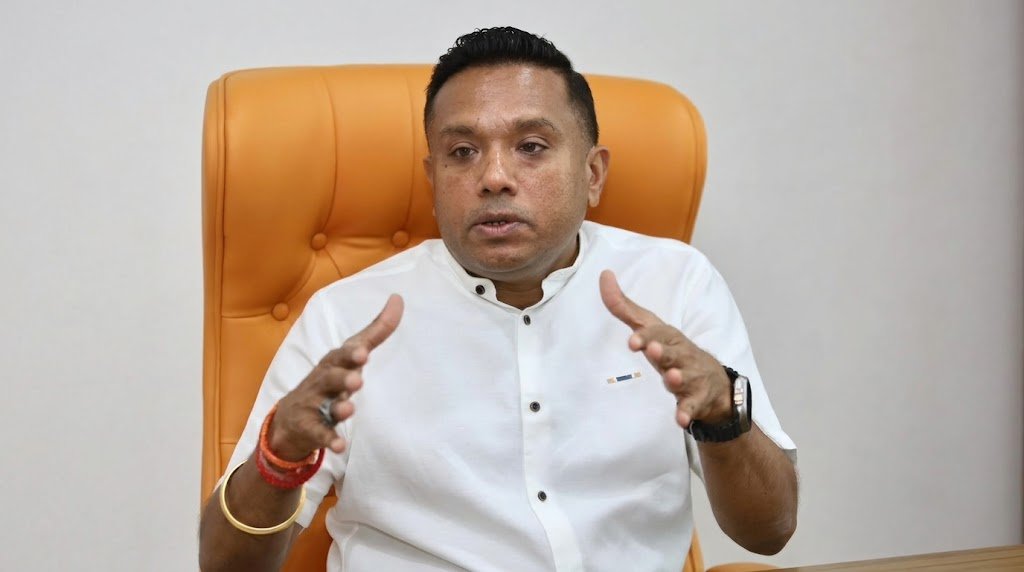
KUALA LUMPUR: Places of worship must never become a safe haven for criminal activities, with Malaysian Hindu Temples and Religious Associations Council (Mahima) president Datuk N. Sivakumar insisting that no one should be allowed to hide behind religion to escape the law.
He said allegations that an unregistered temple had been used to store drugs, involving a reported seizure worth RM16.2 million and the arrest of eight individuals, were deeply concerning and warranted a thorough investigation.
“Mahima will not protect or defend anyone who uses religion or the premises of a place of worship as a venue for criminal activities.
“The law must be enforced without regard to a person’s background, position or identity,” he said in a statement.
Sivakumar stressed that places of worship were established to serve as centres of faith, spiritual guidance, community service and moral development, not as locations for activities that violate the law.
He said any attempt to exploit a religious institution for criminal purposes must be condemned, as such acts not only undermine public trust but also risk tarnishing the reputation of an entire religious community.
No one is above the law
Sivakumar said Mahima supported firm action by the Royal Malaysia Police (PDRM) and other relevant enforcement agencies to establish the facts, identify those responsible and ensure that appropriate legal action was taken.
He stressed that religious sensitivities should not be used to shield anyone from scrutiny or prevent the authorities from carrying out their duties.
“Any individual found to have committed an offence must be held accountable. No one should be given protection simply because a place of worship or the name of a religion is involved,” he said.
He added that the investigation must be allowed to proceed professionally, with conclusions based on evidence rather than assumptions, speculation or public pressure.
Do not blame an entire religious community
At the same time, Sivakumar urged the public to distinguish between the alleged actions of individuals and the wider Hindu community, warning against sweeping generalisations that could fuel prejudice and damage interfaith relations.
“Any allegation must be assessed based on facts and the outcome of investigations, rather than sentiments or prejudice against a particular religion,” he said.
He said criminal wrongdoing, if established, should be addressed through the legal process and must not be used as a basis to stigmatise an entire religious community.
Sivakumar also called on temple management committees, Hindu religious associations and those responsible for places of worship to review their security arrangements and strengthen supervision of their premises.
He said clear management procedures, proper monitoring and cooperation with local authorities were essential to ensuring that religious facilities remained safe and were not exploited for unlawful purposes.
He added that closer cooperation between temple administrators, local communities and enforcement agencies could help prevent criminal activities while preserving the dignity and standing of religious institutions.
Sivakumar called for a comprehensive, transparent and professional investigation, stressing that anyone found guilty must face the consequences in accordance with the law.
“The sanctity of places of worship must be protected. Crime must never be shielded in the name of religion,” he said.