






































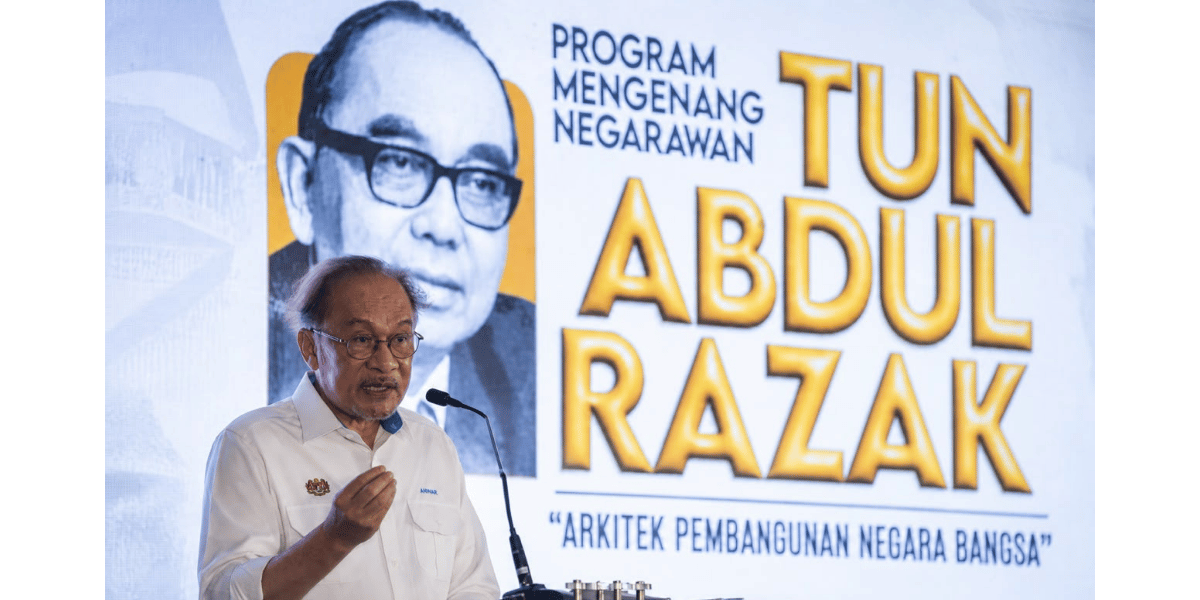
KUALA LUMPUR – A warning delivered to a group of young Malaysians more than five decades ago has remained etched in Datuk Seri Anwar Ibrahim’s memory, particularly its message about how power can test a person’s principles.
Anwar recalled that when he was still a student, Tun Abdul Razak Hussein had told young people that it was easy to reject corruption when nobody was interested in bribing them.
The real test, according to the late statesman, would come when they grew older, entered public service and moved into positions of authority.
That recollection remains relevant to Anwar today, as corruption continues to be among the challenges facing the country.
Tun Abdul Razak was Malaysia’s second Prime Minister, serving from 1970 until his death in 1976. He was a key figure in the country’s early nation-building, particularly in developing rural areas, eradicating poverty and addressing economic disparities.
His premiership came after one of the most difficult periods in Malaysia’s history, following the May 13, 1969 racial riots. Rebuilding national unity, strengthening the economy and ensuring development reached ordinary Malaysians were among the major challenges of his time.
It was in that difficult environment that Tun Razak identified three threats to the country: communism, communalism and corruption.
Anwar said the militant communist threat faced during Tun Razak’s era was no longer present in the same form, although Malaysia must remain vigilant against foreign ideologies. Communalism and corruption, however, remain challenges that cannot be taken lightly.
He recalled that Tun Razak took the issue of corruption seriously enough to send officials close to the country’s elite to universities to speak to students about the danger.
For Anwar, the lesson behind the warning was simple but profound. Principles are easy to defend when there is nothing to tempt a person. The real test comes when power, position and opportunity enter the picture.
Anwar also said Tun Razak’s efforts to uplift Malays and rural communities should not be reduced to a narrow racial agenda, stressing that poverty itself does not recognise race and that the fundamental objective was to improve the lives of disadvantaged communities.
He said Tun Razak’s legacy should therefore not be confined to stories about his achievements or the institutions he established.
More importantly, the younger generation should understand the ideas and values behind his leadership and keep them relevant to the challenges Malaysia faces today.
Anwar was speaking at the Program Mengenang Negarawan Tun Abdul Razak: “Arkitek Pembangunan Negara Bangsa” at Memorial Tun Abdul Razak, Jalan Perdana, here, today. -MalayaDailyToday