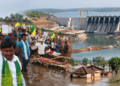







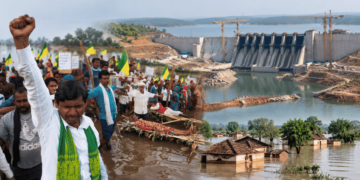
























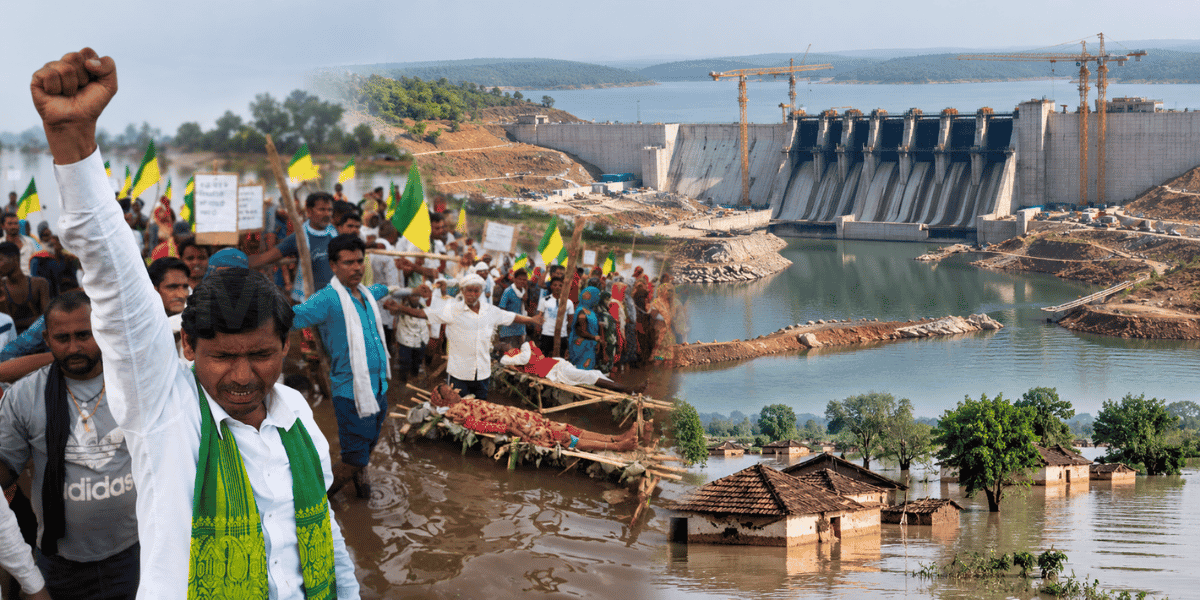
MADHYA PRADESH – Bitti Bai Kondar has watched floodwaters reach her village as construction advances on a massive dam project, but she and her four sons are refusing to abandon their ancestral land without better compensation.
The family is among hundreds of tribal residents protesting the Ken-Betwa River Linking Project, a US$4.6 billion scheme intended to divert water from the Ken River in Madhya Pradesh to the Betwa River in Uttar Pradesh.
‘The government is taking our land and water without giving us another place to live,’ Kondar told Reuters, saying the compensation offered would not be enough for families to rebuild their lives.
The project forms the first phase of India’s wider US$87 billion plan to link about 30 rivers, with the government aiming to improve water supplies and irrigation in drought-prone regions.
Residents in Panna district have been offered at least 1.25 million rupees (about US$13,000) per hectare, more than twice the initial offer of 500,000 rupees.
District administrator Usha Parmar said compensation had been paid to more than 90 per cent of affected residents. Some villagers, however, say the payments do not reflect the full extent of their losses.
For local priest Dhaniram Bhatnagar, the damage has already reached beyond his home. The temple where he worked has been submerged, leaving him without his main source of income.
‘The temple was my only source of income and now it is gone,’ he told Reuters.
The project has also drawn criticism over its environmental impact. The proposed Daudhan Dam is expected to inundate about 9,000 hectares of land, including a significant portion of the Panna Tiger Reserve, an important tiger conservation area.
The government says the environmental impact can be mitigated through tree planting, wildlife conservation and other measures.
But Himanshu Thakkar, coordinator of the South Asia Network on Dams, Rivers and People, questioned whether the project’s underlying water calculations had been conclusively established.
The plan depends on the assumption that the Ken basin has surplus water while the Betwa basin faces a deficit, he said.
A government spokeswoman referred Reuters to an earlier statement that the project would help address chronic water shortages in the Bundelkhand region through irrigation, drinking water supplies and hydropower.
For Kondar and other protesters, the immediate demand remains better compensation and a viable place to rebuild their lives before their ancestral homes are lost to the project. -MalayaDailyToday