




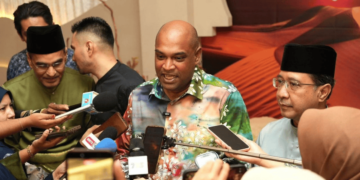








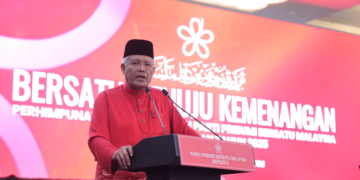






















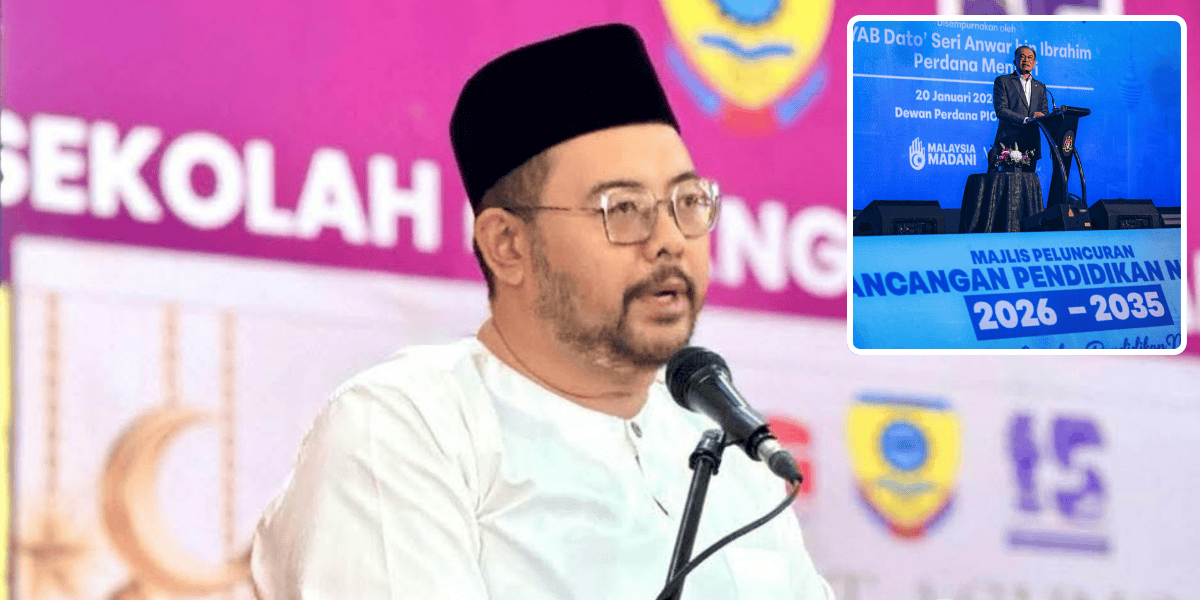

KUALA LUMPUR – The National Education Plan (RPN) 2026–2035 reflects the MADANI government’s serious and long-term commitment to reforming Malaysia’s education system and developing future-ready human capital, said KEADILAN deputy secretary-general Saifuddin Shafi Muhammad.

In a statement responding to the Prime Minister’s announcement, Saifuddin described the RPN as a comprehensive and forward-looking blueprint that charts a clear direction for national education over the next decade.
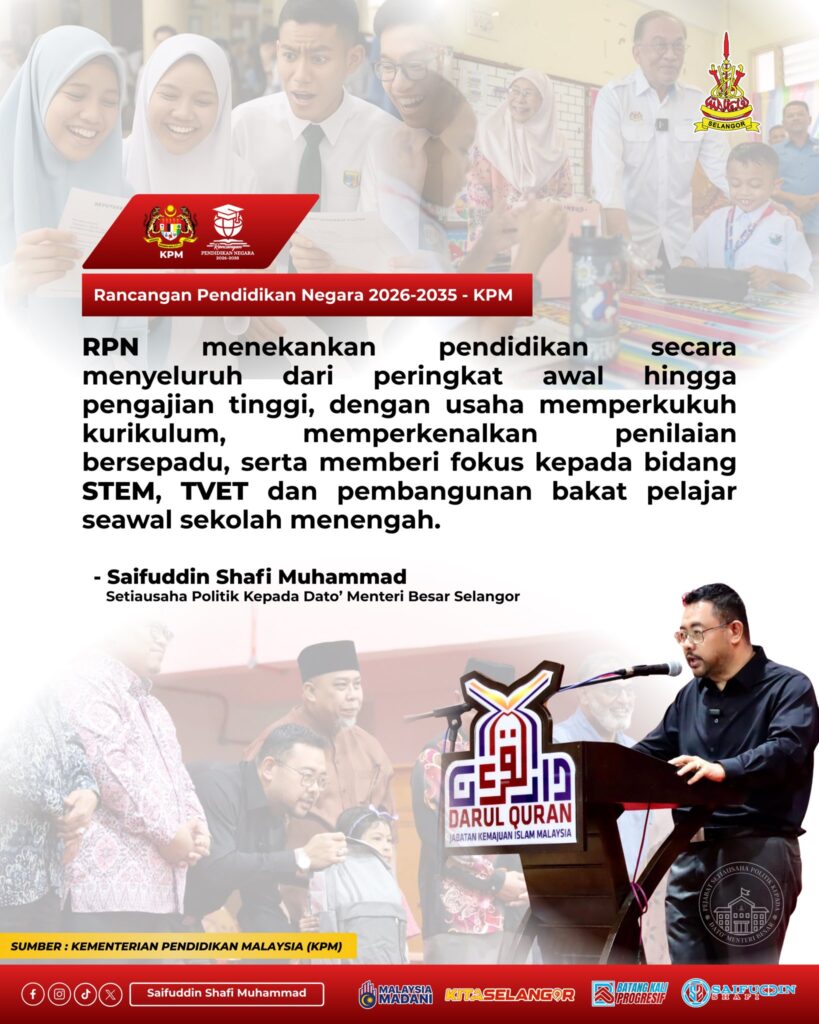
“The RPN places strong emphasis on holistic education from early childhood to higher education with focused efforts to strengthen the curriculum, introduce integrated assessment models, and prioritise key areas such as STEM, TVET and early talent development beginning at the secondary school level,” he said.
According to Saifuddin, the approach goes beyond policy formulation and demonstrates the MADANI government’s resolve to build a fairer, more competitive generation anchored in strong values and national identity.
He also welcomed the government’s decision to place Form Six and Matriculation programmes under the Ministry of Higher Education beginning in 2027, describing the move as a strategic step to create a more structured, coherent and quality pre-university ecosystem.
“This restructuring will better align pre-university education with current academic and industry needs, while improving quality and relevance for students preparing for higher education,” he said.
Saifuddin further praised the announcement to exempt tuition fees for approximately 3,000 students with disabilities enrolled in public universities, polytechnics and community colleges, calling it a meaningful reflection of social justice and inclusivity core principles of the MADANI administration.

“The decision sends a strong message that no student will be left behind, regardless of physical or learning challenges,” he said.
He also supported the Prime Minister’s firm stance on maintaining Bahasa Melayu and History as foundational subjects across all school streams, including institutions following the Unified Examination Certificate (UEC) pathway.
“This is a necessary step to ensure students not only acquire high-level skills but also remain grounded in the nation’s identity, history and shared values,” he said.

Saifuddin said the introduction of the National School Reform initiative which will see five primary schools (SK) and five secondary schools (SMK) in each district selected as inspiration schools has the potential to act as a catalyst for improving education standards nationwide.
“The ripple effect from these model schools can elevate teaching quality, leadership and innovation across the broader education system,” he said.
He also welcomed the move to begin preschool education at age five and allow voluntary Year One enrolment for six-year-olds starting next year, noting that early exposure to structured learning is crucial for unlocking children’s potential without compromising their holistic development.
In addition, Saifuddin expressed support for the reintroduction of formal assessments at Year Four and Form Three, describing it as a balanced approach that strengthens learning foundations while ensuring students receive focused academic support.
On teachers’ welfare, Saifuddin said the RM100 million allocation announced for upgrading teachers’ rooms underscores the government’s recognition of educators as the backbone of the education system.
“This is not merely about infrastructure. It is about valuing teachers, improving their working environment, and ensuring a healthier, more supportive educational ecosystem,” he said.
Saifuddin expressed confidence that with the support of all stakeholders, the RPN 2026–2035 can produce a generation of young Malaysians who are resilient, competitive and well-prepared for future challenges.
“Education is not just about teaching children to read and write it is about shaping the nation’s future,” he said.
“I fully support the progressive initiatives introduced under the MADANI government and urge all parties to come together to ensure the success of this plan, for the sake of our education system and the country.”
Saifuddin is also the Selangor Information Chief of KEADILAN. -MalayaDailyToday