




























Schools are supposed to be safe places where children learn, grow and prepare for their future. Parents send their children to school with the basic expectation that they will be protected while under the care and supervision of the education system. When a child loses his or her life within that environment, we cannot treat it simply as another disciplinary incident or respond with the usual expressions of concern after the tragedy has occurred.
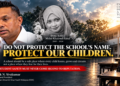
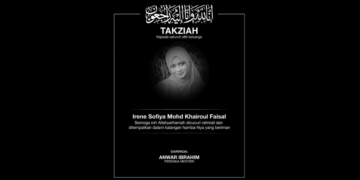
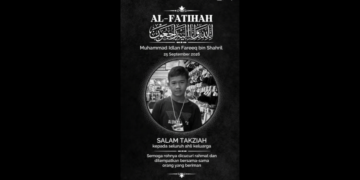
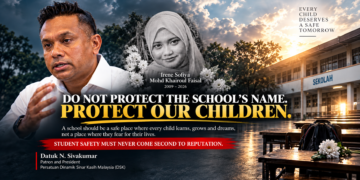
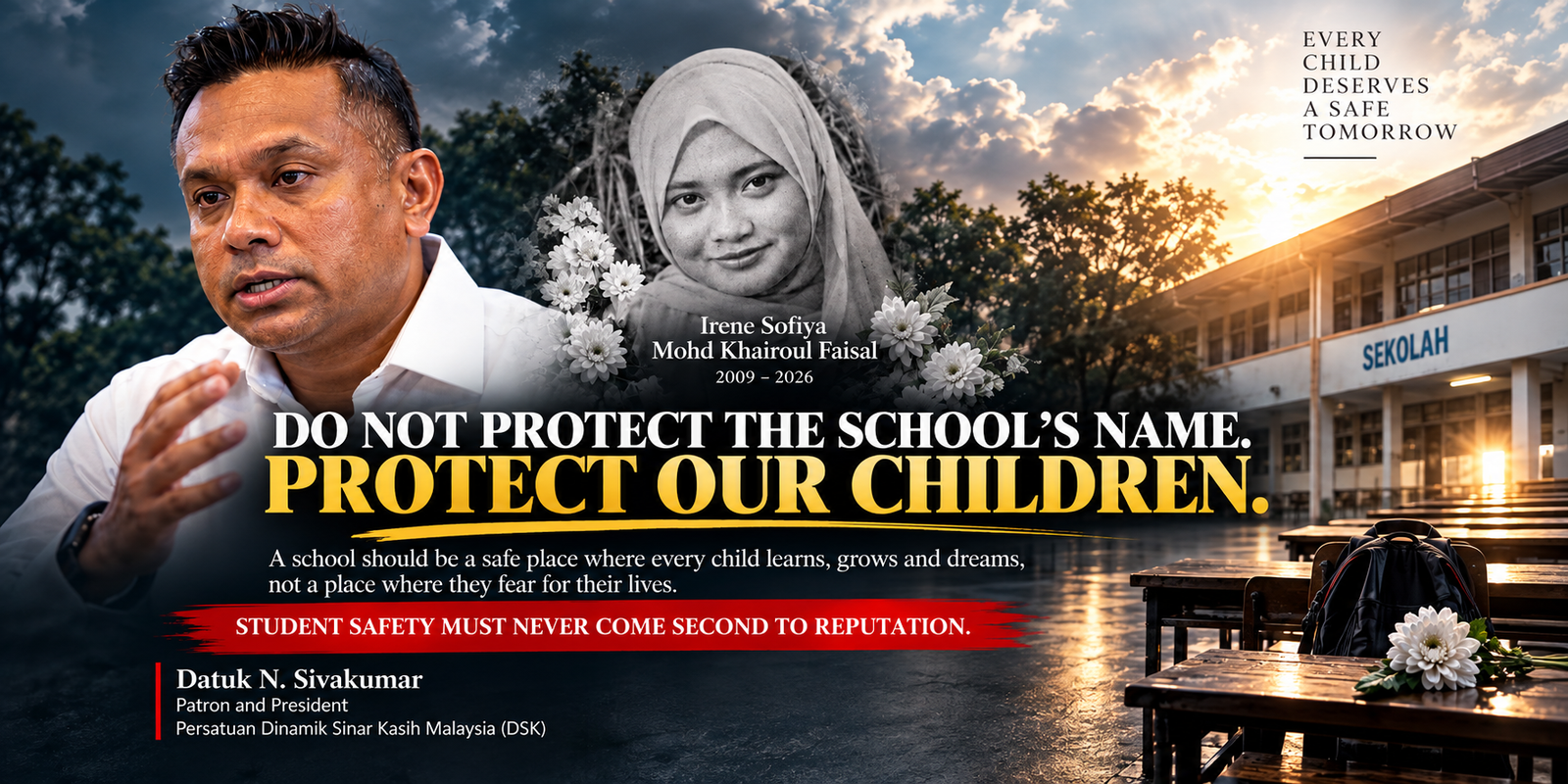
The recent death of a 14-year-old student in Kuala Pilah, where police are investigating possible elements of bullying and the student was believed to have been assaulted with a rubber hose and hands, should already have been a serious warning. We are now confronted with the death of 16-year-old Irene Sofiya Mohd Khairool Faisal, who was found covered in blood at a school in Yong Peng, with three 16-year-old male students detained to assist investigations. Two cases, two sets of circumstances, but both raise the same fundamental question: how safe are our children when they are inside the very institutions entrusted with their care?
I want to be clear that Irene Sofiya’s death must not be prematurely labelled as a bullying case. The police investigation must be allowed to establish the facts, including what happened, why it happened and who was responsible. But that should not prevent us from examining the broader issue of school safety now. We cannot wait for every investigation to conclude before asking whether there were weaknesses in supervision, reporting mechanisms, discipline or the protection of students.
The Ministry of Education already has school safety guidelines and a Student Protection Policy. Following the Kuala Pilah tragedy, a safety audit was also ordered. This means the issue is no longer about whether policies exist. The real question is whether these policies are being implemented effectively at ground level and whether those responsible are actually doing what they are supposed to do.
A safety audit must therefore go beyond checking files and confirming that schools have followed procedures on paper. It must examine hostel supervision, the role of wardens and teachers, areas where monitoring is weak, previous complaints, disciplinary records and how quickly action is taken when a student raises an alarm. Most importantly, students themselves should be asked whether they feel safe, whether they know where to seek help and whether they believe adults will act when they report a threat or abuse.
There must also be no attempt to protect an institution simply because acknowledging a failure may affect its reputation. The reputation of a school can be repaired; the life of a child cannot. If an investigation or audit identifies negligence, that negligence must be addressed. If procedures were ignored, there must be accountability. If misconduct is established, disciplinary action must follow, regardless of who is involved.
We also need to be honest about discipline. Discipline in schools cannot be reduced to matters such as attendance, uniforms, hairstyles or minor rule violations while violence between students is treated as something that can be managed through counselling or warnings alone. A student who threatens, assaults or repeatedly intimidates another student must understand that such behaviour has consequences. Education is not about protecting wrongdoers from consequences; it is about teaching responsibility and respect for others.
This does not mean every disciplinary matter should automatically become a criminal case. There must be due process, fairness and proportionality. But where conduct crosses the line into violence or criminal behaviour, age or student status cannot become a blanket excuse for inaction. The appropriate disciplinary process must take place, and where a criminal offence is established, the law must be allowed to take its course.
We have seen before how devastating failures surrounding student safety can become. In 2024, the death of 17-year-old Muhd Nazmie Aizat at Kolej Vokasional Lahad Datu resulted in criminal proceedings involving 13 students. The circumstances of every case are different and not every student death should be automatically described as bullying. Nevertheless, every tragedy involving a child in an educational institution should compel us to examine what happened, what could have been detected earlier and what must change.
We must also recognise that many children do not immediately report bullying, threats or abuse. Some are afraid of retaliation, some are ashamed and others simply do not believe that speaking up will make a difference. Changes in behaviour, fear of attending school, unexplained injuries, withdrawal or a sudden fear of particular individuals should therefore never be casually dismissed. Teachers, wardens, counsellors and parents must be prepared to recognise these warning signs and intervene before a situation escalates.
I am not calling for a rush to judgment in either the Kuala Pilah or Yong Peng cases. I am calling for something more basic and more important – a system that is willing to confront its own weaknesses honestly. If something is not working, we must say so. If a procedure is ineffective, change it. If someone has failed in their responsibility, hold them accountable.
We cannot continue with a cycle where a tragedy occurs, condolences are expressed, investigations are launched, audits are announced and public attention eventually moves on, only for the same concerns to return when another child is harmed. The purpose of an investigation and an audit must ultimately be to prevent the next tragedy, not simply to explain the last one.
Our children are sent to school to receive an education, build friendships and prepare for life. They should not have to enter a classroom or hostel wondering whether they will be bullied, assaulted, threatened or ignored when they ask for help. There must be no compromise when it comes to their safety, no protection for wrongdoing and no attempt to preserve an institution’s image at the expense of a child’s life.
The priority must always be the child. Protect the student first, establish the truth, enforce discipline and hold those responsible accountable. That is the minimum our children and their families deserve. -MalayaDailyToday
Datuk N. Sivakumar
Patron and President, Persatuan Dinamik Sinar Kasih Malaysia (DSK)