



















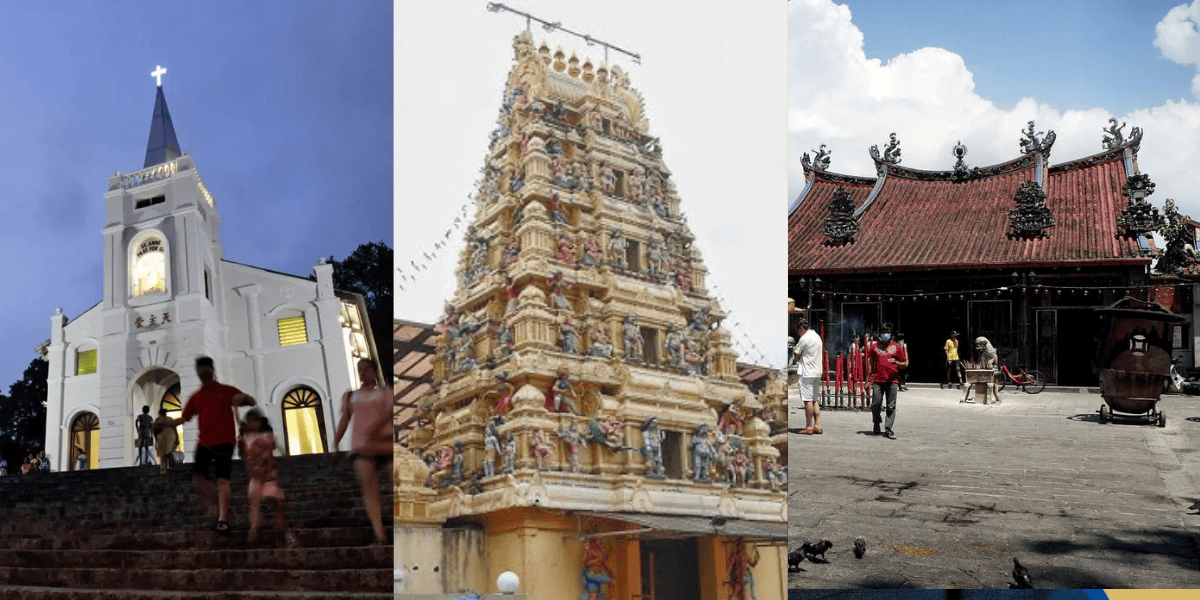
Disputes involving non-Muslim places of worship are a long-standing legacy issue that no government has fully resolved. For decades, these matters were managed quietly, postponed, or addressed only when they became crises. While this reduced immediate political pressure, it failed to provide lasting solutions and merely passed the problem forward.
Today, Malaysia has an opportunity to finally close this chapter.
Prime Minister Datuk Sri Anwar Ibrahim’s call to resolve this issue once and for all deserves strong support. Leadership is about confronting inherited problems with courage, balance, and a commitment to justice for all Malaysians. Resolving this matter will not be easy and will carry political implications, but nation-building has never been achieved through hesitation.
Many non-Muslim places of worship now labelled as “illegal” were not built unlawfully at the time of their establishment. Fir example, A significant number of temples were constructed decades ago on rubber and oil palm estates during the colonial and early post-independence period, often with the knowledge or consent of estate management or owners to serveestate workers and local communities. These were not temporary structures nor acts of defiance against the law.
Their vulnerability emerged later, when estates were sold, subdivided, and redeveloped under the modern Torrens land registration system. As a result, places of worship that had existed peacefully for generations were suddenly reclassified as encroachments, despite their historical legitimacy and deep community roots. This reality must be acknowledged honestly.
At the same time, the rule of law is non-negotiable. Freedom of religion does not mean that places of worship can be built anywhere without land rights, planning approval, or legal compliance. New unauthorised constructions cannot be defended.
The tension today stems largely from blanket enforcement without sufficient context. Treating all non-Muslim places of worship the same, regardless of history or circumstances, is neither fair nor wise. Each case must be assessed on its own merits, guided by facts, history, land status, safety considerations, and community impact. This is not a religious issue but a governance issue.
Malaysia needs policy reform that reflects maturity, consistency, and empathy. This includes formal recognition of historical non-Muslim places of worship, a clear distinction between legacy sites and newly built unauthorised structures, and lawful pathways such as long-term leases, special-use titles, land swaps, or dignified relocation where retention is not feasible.
Enforcement must be the last option, not the default response. Dialogue, mediation, and administrative solutions must come first.
The establishment of a centralised Non-Muslim Places of Worship Commission at the federal level is essential to ensure coordination, consistency, and fairness, and to prevent enforcement actions without proper assessment, except where immediate public safety is at risk.
Planning and development laws must also be strengthened to ensure existing places of worship are identified early in future projects, preventing disputes before they arise.
Protecting historical places of worship does not weaken the law. Upholding the law does not mean ignoring history. Malaysia must move away from reactive enforcement and towards principled, transparent reforms that uphold property rights, respect religious freedom, and preserve social harmony.
This is how difficult legacies are resolved not by delay, but by leadership.
-MalayaDailyToday